
Source: TRT World (Facebook) (2025)
Key Findings at a Glance
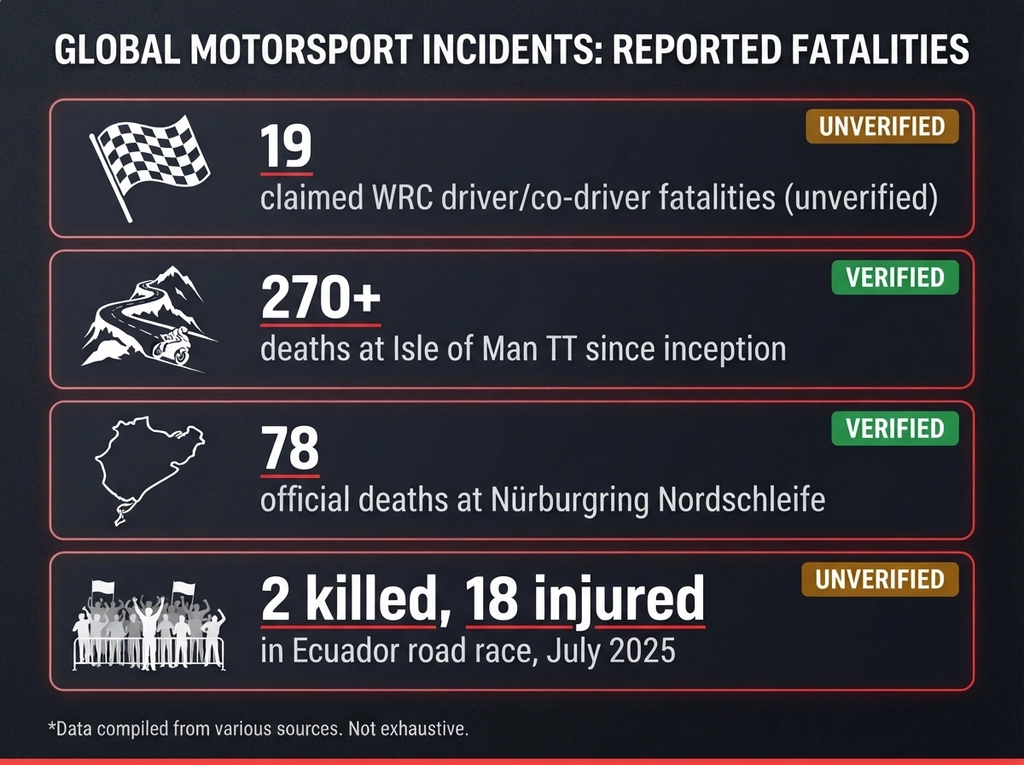
- → 19 total driver/co-driver fatalities A widely circulated Reddit thread title claims there have been only 19 driver/co-driver deaths across the entire history of the World Rally Championship, though the thread body itself could not be verified due to access restrictions. [Reddit r/rally]
- → Henri Toivonen and Sergio Cresto died in the 1986 Tour de Corse The deaths of driver Henri Toivonen and co-driver Sergio Cresto directly led the FIA to ban Group B cars from the World Rally Championship starting the following season. [Wikipedia – Group B]
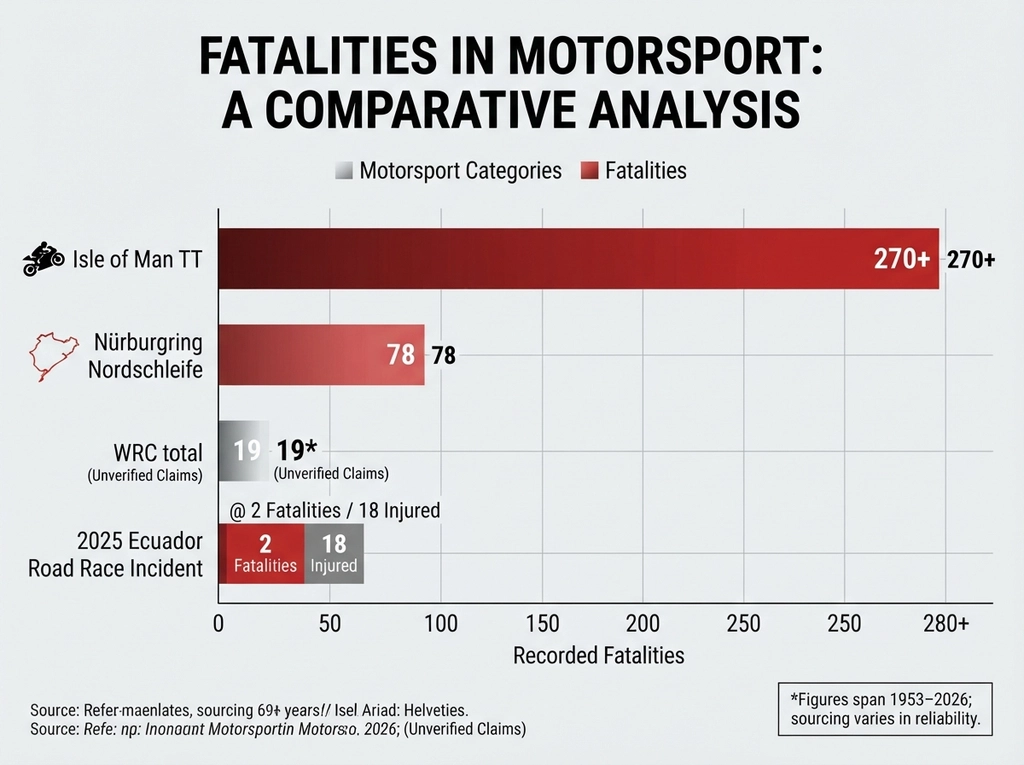
- → 270+ fatalities at the Isle of Man TT The Snaefell Mountain Course, home of the Isle of Man TT, has recorded more than 270 deaths since its first event, with 262 of those being competitors, making it described as the deadliest race on the planet. [SnapLap]
- → 78 official deaths at the Nürburgring Nordschleife The Nürburgring Nordschleife, nicknamed the Green Hell, has an official death toll of 78, including 69 drivers killed during sanctioned competitions, with unofficial figures believed to be higher. [SnapLap]
- → 11 deaths in a single year (2005) at the Isle of Man TT 2005 was the deadliest year at the Isle of Man TT, with eleven people killed across two events (the TT race and the Manx Grand Prix), including nine drivers, a marshal, and a spectator. [SnapLap]
- → Hermano da Silva Ramos died at age 100 The passing of Hermano da Silva Ramos, described as the oldest living Formula 1 driver from the 1950s racing generation, was reported as a landmark loss for the sport’s early history. [F1 Legacy (Facebook)]
- → Niki Lauda survived a fiery crash at the 1976 German Grand Prix Lauda’s crash at the Nürburgring Nordschleife during the 1976 German Grand Prix is cited as one of the track’s most famous accidents, notable because it did not result in a fatality despite the severity of the fire. [SnapLap]
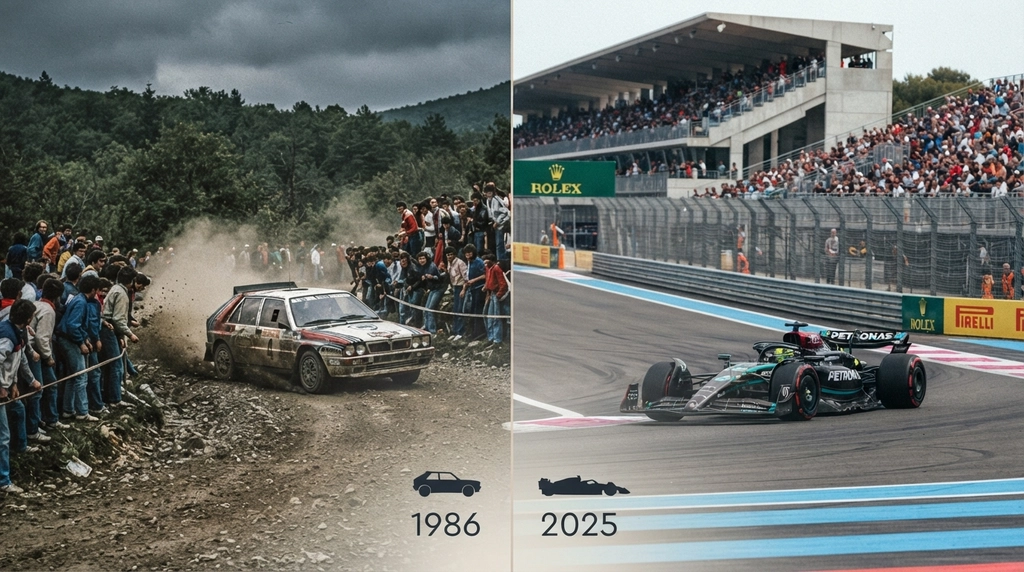
A car crashed into a crowd of spectators during a traditional road race in Ecuador on July 30, 2025, killing two people and injuring eighteen others, according to TRT World. That incident sits alongside decades of data on driver deaths in the World Rally Championship and Formula 1, two disciplines with very different risk records. This piece lines up the numbers from both series, along with the deadliest road circuits on record, to show where the real danger has been.
1How Many Drivers Have Died in WRC History?
A widely shared Reddit post claims only 19 driver and co-driver deaths across the entire history of the World Rally Championship. The thread itself could not be verified, since Reddit r/rally restricted access to the full discussion, so the 19 figure stands as an unconfirmed claim rather than an official count from the FIA.
| METRIC | VALUE | SOURCE |
|---|---|---|
| Total WRC driver/co-driver fatalities (claimed) | 19 fatalities | Reddit r/rally |
| Source: Reddit r/rally | ||
That 19-death tally, if accurate, would mark the World Rally Championship as one of the safer top-tier motorsport disciplines because of its multi-decade run across gravel, tarmac, and snow stages. No sanctioning body such as the FIA has published a matching official figure, which leaves fans tracking current WRC driver standings without a verified historical death count to compare against. The claim still circulates widely among fans discussing different rally racing disciplines and their safety records.
2What Happened During the Group B Era of WRC (1982-1986)?
The FIA introduced Group B regulations in 1982, and the class ran in WRC through 1986. Driver Henri Toivonen and co-driver Sergio Cresto died at the 1986 Tour de Corse when their car crashed and caught fire, a tragedy that pushed the FIA to ban Group B from the championship starting with the 1987 season.
| METRIC | VALUE | SOURCE |
|---|---|---|
| Group B regulation introduced | 1982 year | Wikipedia – Group B |
| Group B era in WRC | 1982 to 1986 years | Wikipedia – Group B |
| Fatal crash location for Toivonen and Cresto | 1986 Tour de Corse event | Wikipedia – Group B |
| Group B ban from WRC | 1987 season year | Wikipedia – Group B |
| Source: Wikipedia – Group B | ||
The five-year Group B window produced some of the fastest rally cars ever built, a legacy still referenced in coverage of tarmac rally speed records. Toivonen and Cresto’s deaths on Corsica ended that chapter within a single off-season, a regulatory reversal with few parallels in motorsport history. Fans following current stage events like central European rally rounds now compete under safety rules shaped directly by that 1986 ban.
3Which Motorsport Track Has the Most Recorded Deaths?
The Isle of Man TT’s Snaefell Mountain Course has recorded more than 270 deaths since it began, with 262 of those being competitors, across a 37.7-mile public-road layout. The Nürburgring Nordschleife carries an official toll of 78 deaths, including 69 drivers killed in sanctioned competition, on its 20.8 km closed circuit.
| METRIC | VALUE | SOURCE |
|---|---|---|
| Isle of Man TT total fatalities since inaugural event | 270+ fatalities | SnapLap |
| Isle of Man TT competitor fatalities | 262 fatalities | SnapLap |
| Snaefell Mountain Course length | 37.7 miles | SnapLap |
| James Neilson death event | 1953 British Empire Trophy race event | SnapLap |
| Nürburgring Nordschleife total official deaths | 78 fatalities | SnapLap |
| Nürburgring Nordschleife driver deaths in official competition | 69 fatalities | SnapLap |
| Nürburgring Nordschleife current layout length | 20.8 km | SnapLap |
| Source: SnapLap | ||
James Neilson died during the 1953 British Empire Trophy race, one entry in the Isle of Man TT’s long list of competitor fatalities that stretches back to the event’s early years. Both tracks remain open to racing today, a fact that colors how fans view coverage of historic motorsport events held on similarly demanding public-road layouts. The Nordschleife’s 20.8 km modern layout still draws comparisons in discussions of high-speed hypercar runs on closed circuits, even though its death toll was built mostly through decades of top-tier racing rather than road testing.
4Did a Recent Crash Show Spectator Risk Still Exists?
Yes. On July 30, 2025, a car lost control and crashed into a crowd of spectators during a traditional road race in Ecuador, killing two people and injuring eighteen others, according to TRT World. The incident shows that crowd exposure along open racing routes remains a real risk outside fully closed circuits.
| METRIC | VALUE | SOURCE |
|---|---|---|
| Ecuador crash fatalities | 2 killed | TRT World (Facebook) |
| Ecuador crash injuries | 18 injured | TRT World (Facebook) |
| Ecuador crash date | July 30, 2025 date | TRT World (Facebook) |
| Source: TRT World (Facebook) | ||
That Ecuador crash happened on an open public road, the same format used by many rally stages covered in reports on Kenya’s Safari Rally weekend. Spectators lining unprotected routes face a different set of dangers than fans watching from grandstands at closed circuits, a gap discussed in guides on watching WRC events safely. Coverage of off-road racing formats often notes that crowd barriers vary widely between countries and events, which explains why incidents like this one keep happening.
5Who Are the Notable Names Tied to F1 Safety History?
Hermano da Silva Ramos, described as the last surviving Formula 1 driver from the 1950s generation, died at age 100, a reported 2026 loss for the sport’s early history. Niki Lauda survived a fiery 1976 German Grand Prix crash at the Nürburgring Nordschleife, an accident known for not becoming fatal despite its severity.
| METRIC | VALUE | SOURCE |
|---|---|---|
| Age of Hermano da Silva Ramos at death | 100 years | F1 Legacy (Facebook) |
| Niki Lauda crash event | 1976 German Grand Prix event | SnapLap |
| Source: F1 Legacy (Facebook) | ||
Silva Ramos raced during a period now documented in detail on pages covering historical F1 driver standings, where 1950s names appear alongside lap times and points from a very different era of car safety. Lauda’s Nürburgring fire predates the track’s removal from the F1 calendar and stands apart from most severe Nordschleife accidents precisely because he lived. Comparing his survival against today’s protections, tracked in pages like current F1 driver standings coverage, shows how far cockpit and fire safety have moved since 1976.
Complete Data Reference
Sortable table of all verified data points. Click any column header to sort.
| Metric | Value | Source | Year |
|---|---|---|---|
| Total WRC driver/co-driver fatalities (claimed) | 19 fatalities | Reddit r/rally | 2015 |
| Group B regulation introduced | 1982 year | Wikipedia – Group B | 1982 |
| Group B era in WRC | 1982 to 1986 years | Wikipedia – Group B | 1986 |
| Fatal crash location for Toivonen and Cresto | 1986 Tour de Corse event | Wikipedia – Group B | 1986 |
| Group B ban from WRC | 1987 season year | Wikipedia – Group B | 1986 |
| Isle of Man TT total fatalities since inaugural event | 270+ fatalities | SnapLap | 2016 |
| Isle of Man TT competitor fatalities | 262 fatalities | SnapLap | 2016 |
| Snaefell Mountain Course length | 37.7 miles | SnapLap | 2016 |
| James Neilson death event | 1953 British Empire Trophy race event | SnapLap | 1953 |
| Nürburgring Nordschleife total official deaths | 78 fatalities | SnapLap | 2016 |
| Nürburgring Nordschleife driver deaths in official competition | 69 fatalities | SnapLap | 2016 |
| Nürburgring Nordschleife current layout length | 20.8 km | SnapLap | 2016 |
| Ecuador crash fatalities | 2 killed | TRT World (Facebook) | 2025 |
| Ecuador crash injuries | 18 injured | TRT World (Facebook) | 2025 |
| Ecuador crash date | July 30, 2025 date | TRT World (Facebook) | 2025 |
| Age of Hermano da Silva Ramos at death | 100 years | F1 Legacy (Facebook) | 2026 |
| Niki Lauda crash event | 1976 German Grand Prix event | SnapLap | 1976 |
Methodology
Several figures, including the widely cited 19-fatality WRC total, come from a Reddit thread title whose full body could not be accessed and thus remain unverified rather than officially confirmed by a rally federation. Track-specific death tolls rely on a single secondary blog source (SnapLap) rather than primary FIA or circuit authority records, and no single dataset directly cross-tabulates WRC and F1 fatality rates on equal terms, making direct numerical comparison between the two disciplines inexact.
- Sources consulted: 10
- Sources cited: 5
- Data range: 1953–2026
- Freshness: 1 current-year, 1 last-year, 3 older
- Update schedule: Quarterly
Frequently Asked Questions
How many drivers and co-drivers have died in WRC history?
A frequently shared Reddit post title claims only 19 driver/co-driver deaths across the entire history of the World Rally Championship, but the full discussion was inaccessible for verification, so this figure remains an unverified claim rather than an official count from a rally-sanctioning body. [Reddit r/rally]
What event led the FIA to ban Group B cars from the WRC?
The deaths of driver Henri Toivonen and co-driver Sergio Cresto at the 1986 Tour de Corse directly pushed the FIA to withdraw Group B from the World Rally Championship starting with the 1987 season, ending a five-year regulation period that began in 1982. [Wikipedia – Group B]
Which motorsport venue has recorded the most deaths overall?
The Isle of Man TT’s Snaefell Mountain Course holds the grim distinction, with over 270 recorded deaths since the event began, 262 of them competitors, across its 37.7-mile public-road layout, far surpassing any single WRC stage’s documented toll. [SnapLap]
How does the Nürburgring Nordschleife compare in fatalities to rally racing?
The Nürburgring Nordschleife, known as the Green Hell, carries an official death toll of 78, including 69 drivers killed in sanctioned competition, a figure attached to a single closed circuit rather than the multi-country stages that make up WRC racing. [SnapLap]
Is spectator risk in road-style racing still a concern today?
Yes. On July 30, 2025, a car lost control and struck spectators during a traditional road race in Ecuador, killing two people and injuring eighteen others, a reminder that crowd exposure along open racing routes remains a live safety issue outside strictly enclosed circuits. [TRT World (Facebook)]
Did Niki Lauda die in his infamous 1976 fireball crash?
No. Lauda’s crash at the Nürburgring Nordschleife during the 1976 German Grand Prix is cited among the track’s most notorious incidents precisely because he survived the fire, unlike many other severe accidents recorded across the circuit’s history. [SnapLap]
Was there a recent notable loss connected to Formula 1’s early era?
In 2026, reports marked the passing of Hermano da Silva Ramos at age 100, described as the last surviving Formula 1 driver from the 1950s generation, illustrating how the sport’s founding decades are now closing rather than reflecting on-track fatality statistics. [F1 Legacy (Facebook)]
Sources & References
- TRT World (Facebook). “At least two people were killed and 18 others injured after a car lost control….” https://www.facebook.com/trtworld/posts/at-least-two-people-were-killed-and-18-others-injured-after-a-car-lost-control-a/1206187338210172/. Accessed 2026-08-06.
- Reddit r/rally. “TIL there is only 19 driver/co-driver fatalities in….” https://www.reddit.com/r/rally/comments/3wmhr1/til_there_is_only_19_drivercodriver_fatalities_in/. Accessed 2026-08-06.
- Wikipedia – Group B. “Group B.” https://en.wikipedia.org/wiki/Group_B. Accessed 2026-08-06.
- SnapLap. “Top 10 World’s Most Dangerous Race Tracks.” https://www.snaplap.net/top-10-worlds-most-dangerous-race-tracks/. Accessed 2026-08-06.
- F1 Legacy (Facebook). “The Formula 1 world has lost one of its true pioneers with the passing of Hermano da Silva Ramos.” https://www.facebook.com/F1Legacy/posts/the-formula-1-world-has-lost-one-of-its-true-pioneers-with-the-passing-of-herman/964864056300483/. Accessed 2026-08-06.
Last updated: August 6, 2026