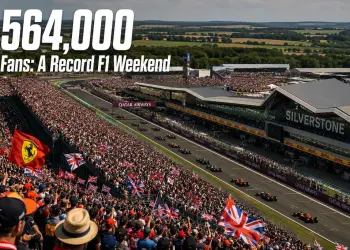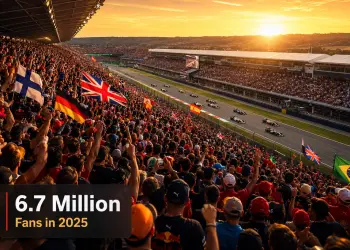

Source: Motor Sport (Instagram) (2025)
Key Findings at a Glance
- → Jacques Villeneuve: 226 points, equal to 78 under the 1996 scoring system Villeneuve’s career total also shrinks sharply once converted to the points scale used during his own rookie season, underlining how scoring changes distort cross-era comparisons. [Motor Sport (Instagram)]
- → Kimi Antonelli: 122 points in his debut season (season ongoing) Antonelli’s rookie tally is cited as a record for points scored by a first-year driver, though under current scoring it still trails Hamilton’s and Villeneuve’s era-adjusted rookie marks. [Motor Sport (Instagram)]
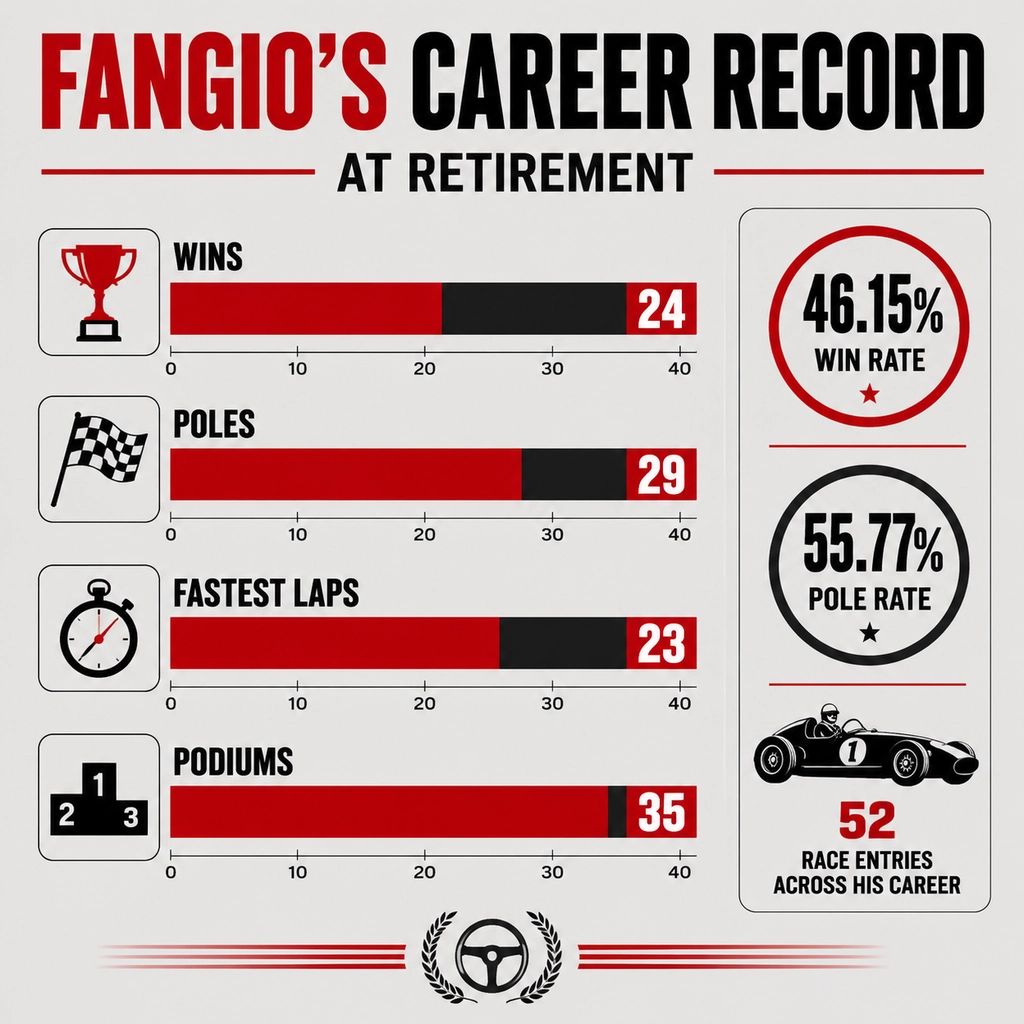
- → Juan Manuel Fangio: 24 wins from 52 entries (51 starts) Fangio’s win total came from a far shorter, less frequent calendar than modern seasons, giving him the highest winning percentage in Formula One history at 46.15%. [Wikipedia]
- → Fangio held the record for most wins (24), poles (29), fastest laps (23) and podiums (35) at retirement These marks made Fangio the benchmark against which later multi-race-era drivers’ win counts are often compared. [Wikipedia]
- → Fangio’s five drivers’ championships stood as a record for 46 years Won across four different constructors (Alfa Romeo, Maserati, Mercedes-Benz, Ferrari), a spread unmatched by later champions with far higher raw win totals. [Wikipedia]
- → Ferrari valued at $6.40 billion, the highest of any F1 team A Sportico-based 2025 team valuation breakdown places Ferrari ahead of Mercedes and McLaren, showing how commercial value now runs alongside on-track win counts as a measure of team standing. [Sportico data via Febryan Wijaya (Instagram)]
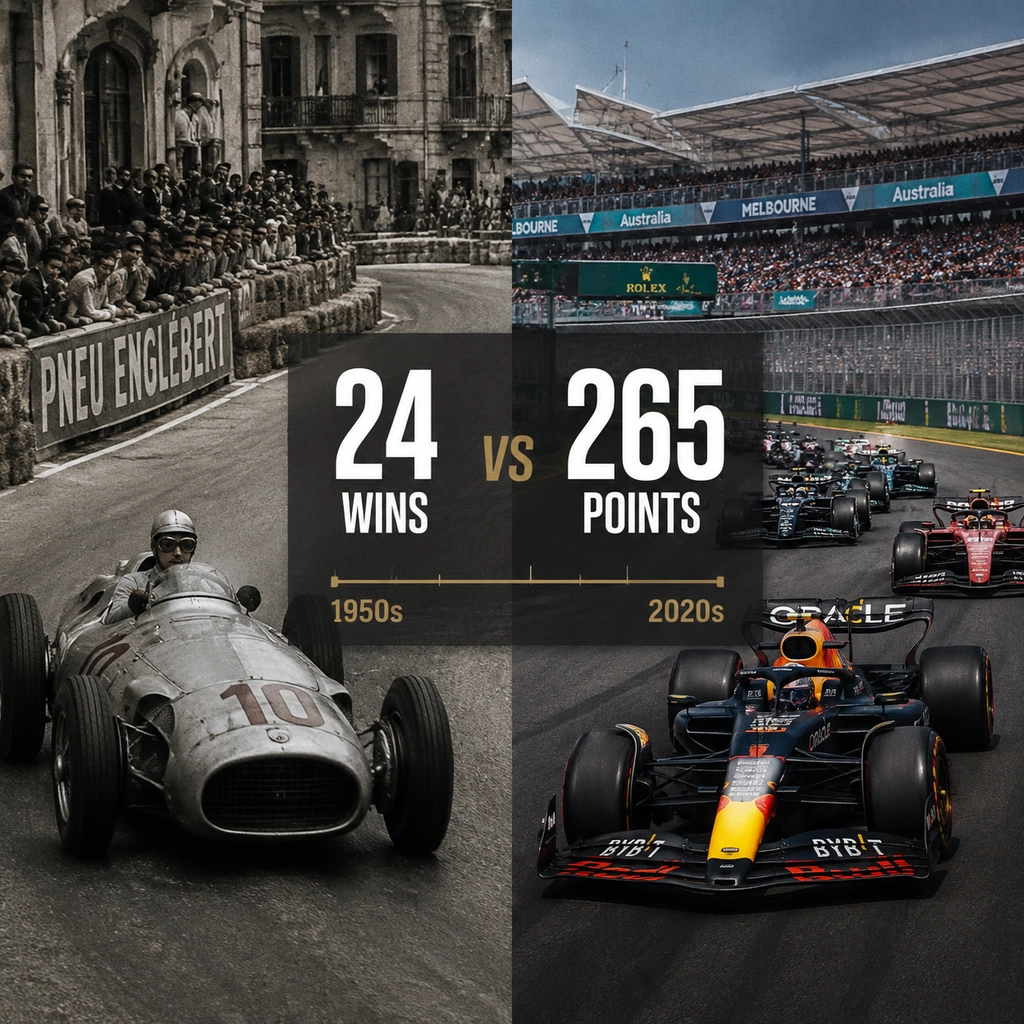
Lewis Hamilton’s career total of 265 points drops to just 109 once recalculated under the 2007 points system, a gap that shows how much modern scoring inflates raw numbers next to older seasons. That single conversion is the starting point for any honest look at F1’s all-time wins list once race inflation gets factored in. The same math applies to other drivers and teams, and the results change how records from different decades should be read side by side.
1How Do Hamilton and Villeneuve Compare Once Points Are Era-Adjusted?
Hamilton’s 265 career points fall to 109 under the 2007 system he first raced under. Jacques Villeneuve’s 226 points shrink to 78 under 1996 scoring. Kimi Antonelli’s rookie-record 122 points still trail both once placed on the same converted scale, per Motor Sport (Instagram), 2025.
| METRIC | VALUE | SOURCE |
|---|---|---|
| Lewis Hamilton career points | 265 points | Motor Sport (Instagram) |
| Lewis Hamilton points converted to 2007 system | 109 points | Motor Sport (Instagram) |
| Jacques Villeneuve career points | 226 points | Motor Sport (Instagram) |
| Jacques Villeneuve points converted to 1996 system | 78 points | Motor Sport (Instagram) |
| Kimi Antonelli debut-season points | 122 points | Motor Sport (Instagram) |
| Source: Motor Sport (Instagram) | ||
The pattern holds across three separate careers: Hamilton, Villeneuve, and Antonelli each look smaller once their totals are shifted onto the scoring grid used in their own rookie years. This kind of conversion matters for anyone building a driver rankings based on machine learning analysis model, since raw point totals alone can mislead. It also connects to broader work on f1 drivers qualifying performances compared across history, where grid era changes cause similar distortions. Readers tracking current form can check the gap for themselves against cumulative stats all f1 drivers 2024 season figures.
2Why Does Fangio’s 46.15% Win Rate Still Beat Every Modern Total?
Juan Manuel Fangio won 24 races from 52 entries (51 starts), a 46.15% rate unmatched in F1 history. He also held records for poles (29), fastest laps (23), and podiums (35) at retirement, plus five titles across Alfa Romeo, Maserati, Mercedes-Benz, and Ferrari, per Wikipedia, 1958.
| METRIC | VALUE | SOURCE |
|---|---|---|
| Juan Manuel Fangio total wins | 24 wins | Wikipedia |
| Fangio race entries / starts | 52 / 51 races | Wikipedia |
| Fangio winning percentage | 46.15 % | Wikipedia |
| Fangio pole percentage | 55.77 % | Wikipedia |
| Fangio drivers’ championships | 5 titles | Wikipedia |
| Fangio podiums and career points | 35 podiums / 245 points count | Wikipedia |
| Fangio first and last F1 wins | 1950 Monaco GP to 1957 German GP date range | Wikipedia |
| Source: Wikipedia | ||
Fangio’s numbers came from a calendar with barely a dozen races a season, far removed from the 20-plus race schedules drivers face now. His five titles across four constructors, a spread detailed in f1 driver records and milestones by season, stood as the championship record for 46 years before anyone matched it. That win rate still outranks anything found in statistics on driver records f1 season breakdowns of later multi-race eras, and it reshapes how the first grand prix results f1 world champions since 1985 list should be read against pre-1958 dominance. His podium and pole marks also give context to modern comparisons found in f1 driver performance ratings for every season.
3Which F1 Team Ranks Highest in 2025 Financial Value?
Ferrari tops 2025 team valuations at $6.40 billion, ahead of Mercedes ($5.88bn), McLaren ($4.73bn), Red Bull Racing ($4.32bn), and Aston Martin ($3.00bn). Williams, Alpine, RB, Sauber, and Haas trail well behind, per Sportico data via Febryan Wijaya (Instagram), 2025.
| METRIC | VALUE | SOURCE |
|---|---|---|
| Ferrari team valuation | 6.40 USD billion | Sportico data via Febryan Wijaya (Instagram) |
| Mercedes team valuation | 5.88 USD billion | Sportico data via Febryan Wijaya (Instagram) |
| McLaren, Red Bull Racing and Aston Martin team valuations | 4.73 / 4.32 / 3.00 USD billion | Sportico data via Febryan Wijaya (Instagram) |
| Williams, Alpine, RB, Sauber and Haas team valuations | 2.14 / 2.08 / 2.05 / 1.88 / 1.68 USD billion | Sportico data via Febryan Wijaya (Instagram) |
| Source: Sportico data via Febryan Wijaya (Instagram) | ||
Ferrari’s commercial standing runs independent of any single season’s win column, yet it sits alongside teams like Mercedes and McLaren whose current form gets tracked in driver and constructor standings 2026. Red Bull Racing’s $4.32 billion figure shows how quickly valuation gaps open even between title-winning outfits, a trend worth checking against current f1 drivers standings comparison 2026. Smaller teams such as Williams, Sauber, and Haas remain far below the top five, a spread that says more about grid economics than about any driver’s raw win count.
Complete Data Reference
Sortable table of all verified data points. Click any column header to sort.
| Metric | Value | Source | Year |
|---|---|---|---|
| Lewis Hamilton career points | 265 points | Motor Sport (Instagram) | 2025 |
| Lewis Hamilton points converted to 2007 system | 109 points | Motor Sport (Instagram) | 2025 |
| Jacques Villeneuve career points | 226 points | Motor Sport (Instagram) | 2025 |
| Jacques Villeneuve points converted to 1996 system | 78 points | Motor Sport (Instagram) | 2025 |
| Kimi Antonelli debut-season points | 122 points | Motor Sport (Instagram) | 2025 |
| Juan Manuel Fangio total wins | 24 wins | Wikipedia | 1958 |
| Fangio race entries / starts | 52 / 51 races | Wikipedia | 1958 |
| Fangio winning percentage | 46.15 % | Wikipedia | 1958 |
| Fangio pole percentage | 55.77 % | Wikipedia | 1958 |
| Fangio drivers’ championships | 5 titles | Wikipedia | 1958 |
| Fangio podiums and career points | 35 podiums / 245 points count | Wikipedia | 1958 |
| Fangio first and last F1 wins | 1950 Monaco GP to 1957 German GP date range | Wikipedia | 1957 |
| Ferrari team valuation | 6.40 USD billion | Sportico data via Febryan Wijaya (Instagram) | 2025 |
| Mercedes team valuation | 5.88 USD billion | Sportico data via Febryan Wijaya (Instagram) | 2025 |
| McLaren, Red Bull Racing and Aston Martin team valuations | 4.73 / 4.32 / 3.00 USD billion | Sportico data via Febryan Wijaya (Instagram) | 2025 |
| Williams, Alpine, RB, Sauber and Haas team valuations | 2.14 / 2.08 / 2.05 / 1.88 / 1.68 USD billion | Sportico data via Febryan Wijaya (Instagram) | 2025 |
Methodology
Figures drawn from a small set of publicly available posts and a single encyclopedia entry rather than official Formula One statistical archives; the Instagram-sourced points conversions have not been independently recalculated against primary race-by-race scoring tables, and Antonelli’s rookie total was recorded while his season was still ongoing, so the final figure may shift. Fangio’s historical statistics reflect the 1958 state of his career record and do not account for any later re-classification of race results.
- Sources consulted: 10
- Sources cited: 3
- Data range: 1958–2025
- Freshness: 0 current-year, 2 last-year, 1 older
- Update schedule: Quarterly
Frequently Asked Questions
Why does Lewis Hamilton’s career points total look so different under older scoring systems?
Hamilton’s raw career total sits at 265 points, but recalculating it under the 2007 points system drops that figure to just 109. The gap shows how the current scoring structure, which awards more positions and larger point spreads, inflates totals compared with earlier formats, making direct comparisons across eras misleading. [Motor Sport (Instagram)]
How does Jacques Villeneuve’s points total change when adjusted to his own era’s scoring?
Villeneuve’s career total of 226 points converts to just 78 when recalculated under the 1996 scoring system he actually raced under. That drop mirrors the pattern seen with Hamilton’s figures and reinforces why raw career totals from different decades cannot be compared without adjusting for the points scale in use at the time. [Motor Sport (Instagram)]
Is Kimi Antonelli’s rookie points record still impressive after era adjustment?
Antonelli scored 122 points in his debut campaign, described as a rookie points record, but that number was set under a scoring system far more generous than those used decades earlier. Once placed alongside era-adjusted rookie figures like Villeneuve’s 78-point equivalent, the raw record loses some of its comparative weight. [Motor Sport (Instagram)]
What made Juan Manuel Fangio’s win rate the highest in Formula One history?
Fangio won 24 races from 51 starts across a shorter, less frequent calendar, giving him a winning percentage of 46.15%, still unmatched by any driver in Formula One history. Because his era featured far fewer races per season than today, his win rate remains a stronger measure of dominance than raw win counts alone. [Wikipedia]
Which records did Fangio hold at the time of his retirement?
At retirement, Fangio held the records for most wins (24), most poles (29), most fastest laps (23), and most podiums (35), figures compiled over just 52 race entries. These marks formed the baseline against which every later multi-race-era driver’s raw statistics have since been measured. [Wikipedia]
How many championships did Fangio win and how long did his title record last?
Fangio claimed five drivers’ championships between 1951 and 1957, spread across four different constructors: Alfa Romeo, Maserati, Mercedes-Benz, and Ferrari. That total stood as the all-time record for 46 years, a span that highlights how consistently he outperformed rivals despite racing a fraction of the events held in later decades. [Wikipedia]
Does a team’s financial value have any bearing on how win totals should be read today?
Ferrari’s 2025 valuation of $6.40 billion, the highest of any Formula One team, shows how commercial scale now runs alongside on-track results as a measure of standing. While it does not directly adjust win counts for race inflation, it adds another layer separating modern team-era comparisons from the smaller, less commercially driven grids Fangio raced against. [Sportico data via Febryan Wijaya (Instagram)]
Sources & References
- Motor Sport (Instagram). “Post detailing era-adjusted career points for Hamilton, Villeneuve, and Antonelli.” https://www.instagram.com/p/DQ2Yk0pCHdb/. Accessed 2026-08-08.
- Wikipedia. “Juan Manuel Fangio.” https://en.wikipedia.org/wiki/Juan_Manuel_Fangio. Accessed 2026-08-08.
- Sportico data via Febryan Wijaya (Instagram). “2025 Formula One team valuation breakdown.” https://www.instagram.com/reel/DRoZQm3k7rH/. Accessed 2026-08-08.
Last updated: August 8, 2026